Air Conditioning Repairs
Call the AC restoration and maintenance contractor more PA residents trust!
EFE Home Services in Allentown, PA has been providing residents with honest and reliable central air conditioning repairs and AC maintenance for fifty years. We have earned the community’s trust by delivering prompt and accurate air conditioning repairs and tune-ups.
We are a licensed and insured HVAC company with a team of air conditioning experts available any time you need us. Call us the next time you are looking for AC repair and maintenance service in Allentown.
Air Conditioning Repairs & Replacement
EFE Home Services understands the frustration of having your AC system stop working in scorching hot weather. That’s why we are always ready to send a licensed plumber to you when you need us most.
We offer the following AC repairs and more:
- Refrigerant Leak Repair
- AC Refrigerant Recharge
- Fuses, Circuit Breakers Repairs
- Thermostat Replacement
- Condensing Unit Fan Motor Repair
- Condensate Drain Line Flush
- Compressor Replacement
- Replacement Condensing Unit Coil
- Condensate Pump Replacement
- Condenser Fan Motor replacement
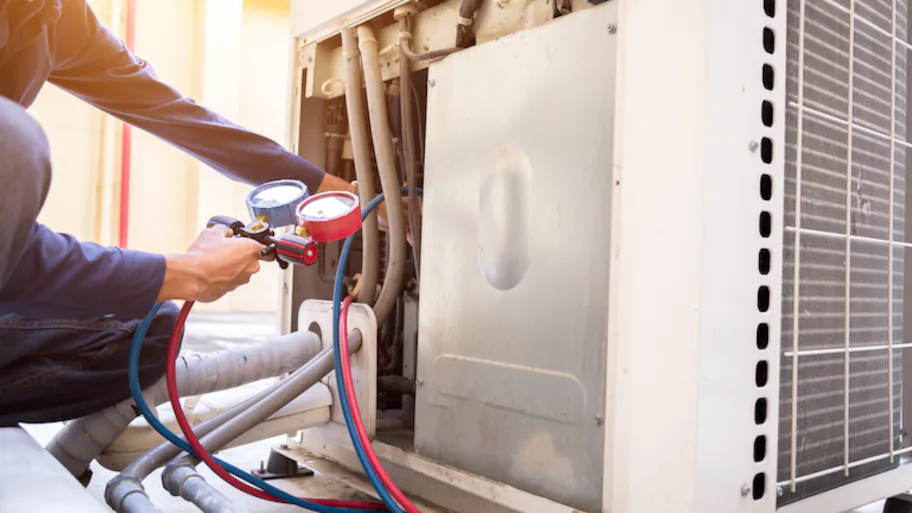
Our technicians are trained to spot AC problems that other contractors will miss. We perform high-quality AC repairs on all makes and models of cooling systems. Let our team bring you cooling relief by providing quality air conditioning services when you need them.
Advantages of Professional AC Maintenance
If you haven’t had your air conditioning system tuned-up by our AC maintenance team, don’t be surprised when it stops working. This is not meant to alarm you, but rather to inform that AC systems that receive regular maintenance have a significant reduction in costly repairs.
An AC system that hasn’t been tuned up in more than a year will break down sooner than expected. Your energy bill will also go up if your AC is not in top condition. This is because AC units require lubrication, a change of filter, and routine troubleshooting to operate at peak capacity. We have an AC maintenance plan for every type of air conditioner.
Enjoy peace of mind all summer long with an annual central AC maintenance plan from EFE Home Services.